
Choosing the Right Viking Quick Response Sprinkler for Your Project
When designing or upgrading a fire protection system, choosing the right sprinkler is just as important as the overall system design. The environment, ceiling configuration, layout, and performance requirements all influence which model is best suited to the application.
At SCS Canada, we help building professionals, contractors, and fire protection specialists choose reliable, compliant components suited to real-world jobsite conditions. Among the common quick response sprinkler options are upright, pendent, horizontal sidewall, and dry pendent sprinklers. Each is designed for very specific installation conditions.
Why quick response sprinklers are often preffered
Quick response sprinklers are designed to activate rapidly when exposed to heat, helping control or suppress a fire earlier in its development. In many commercial and industrial environments, that faster response supports occupant safety while also helping reduce property damage and business interruption.
The models presented here share several basic characteristics:
-
Minimum operating pressure of 7 psi (0.5 bar)
-
Nominal K-factor of 5.6 (80.6 metric)
-
Factory test pressure of 500 psi
-
Available in multiple finishes and temperature ratings depending on the model
-
Designed for use in automatic sprinkler systems in accordance with applicable standards and approval requirements.
Even when their hydraulic characteristics are similar, installation orientation and the application environment remain key criteria when selecting the right sprinkler.
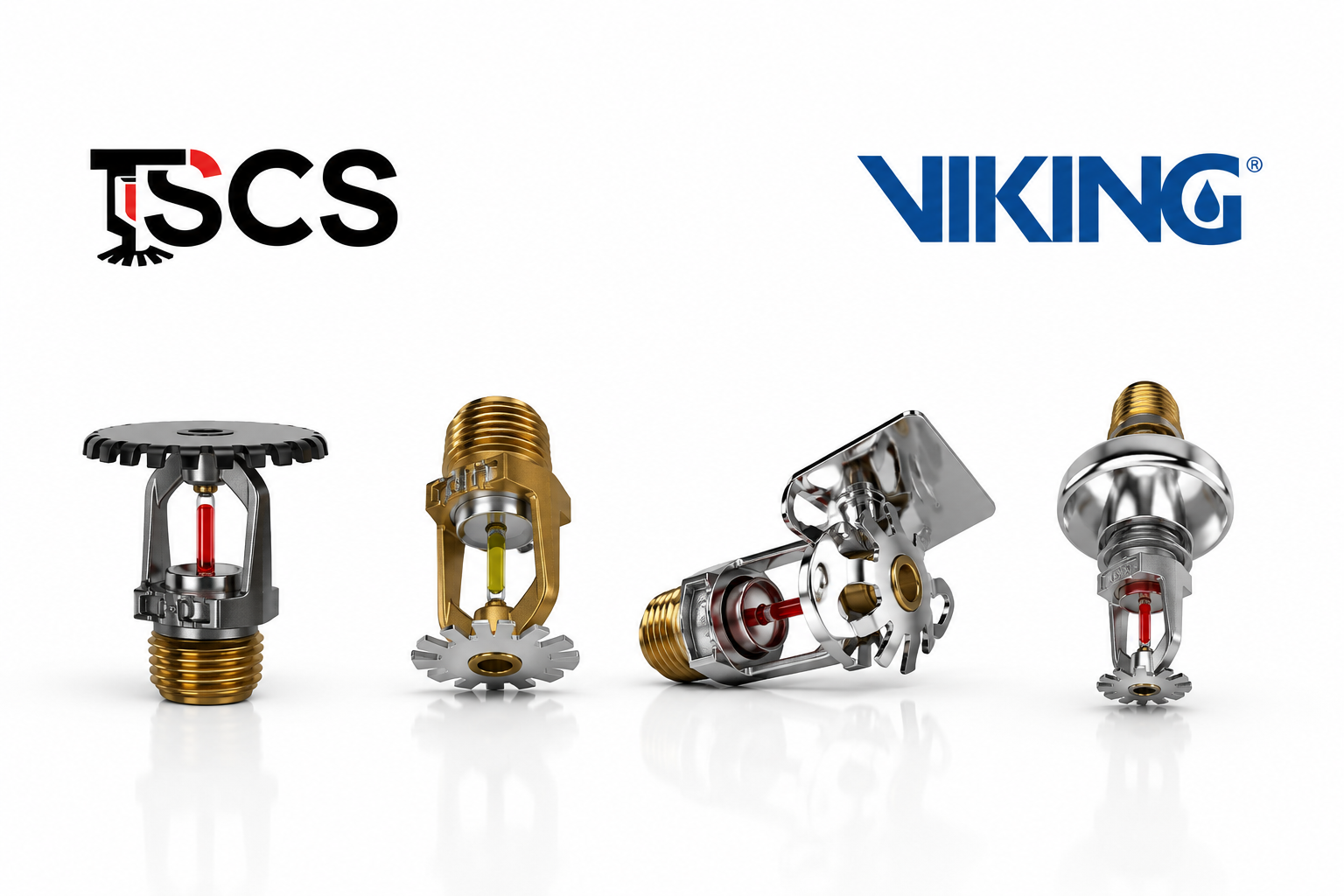
VK3001 : Quick Response Upright Sprinkler
The VK3001 is a standard coverage upright sprinkler. It is designed to be installed with the deflector above the frame so that water flows upward through the orifice before being redirected downward in an umbrella-shaped spray pattern.
He is generally considered when piping layout and sprinkler orientation require an upright configuration. It is a practical choice for exposed piping systems and for applications where this orientation and distribution type are required by the system design.
Key features
-
Upright orientation
-
Standard coverage
-
Quick response performance
-
1/2 in. NPT or 15 mm BSPT threaded connection
-
Maximum rated pressure up to 250 psi under UL criteria and 175 psi under FM and CE criteria
-
Corrosion-resistant options available where permitted by the applicable approval agency
For professionals looking for a proven solution for an upright configuration, the VK3001 represents a reliable option that is easy to inegrate into a system design.
VK3021 : Quick Response Pendent Sprinkler
The VK3021 is a standard coverage pendent sprinkler. It is designed with the deflector below the frame to produce a downward water distribution pattern. It can also be used as a recessed pendent sprinkler when installed with an approved recessed escutcheon.
This model is often well suited to finished-ceiling applications where a pendent configuration is required. It offers flexibility for projects seeking a clean appearance while meeting approved installation criteria.
Key Features
-
Pendent orientation
-
Standard coverage
- Quick response performance
- Compatible with approved recessed escutcheons
- 1/2 in. NPT or 15 mm BSPT threaded connection
- Maximum rated pressure up to 250 psi under UL criteria and 175 psi under FM and CE criteria
- Corrosion-resistant versions available where permitted by the applicable approval agency
In many interior spaces, the VK3021 offers a strong balance of performance, installation, flexibility, and visual integration.
VK305 : Quick Response Horizontal Sidewall Sprinkler
The VK305 Microfast is a horizontal sidewall sprinkler designed for wall-mounted installation. This configuration can be particularly useful when ceiling piping or ceiling-mounted sprinkler placement is not the preferred approach.
Perfect for
Horizontal sidewall sprinklers are often selected for rooms, corridors, and finished spaces where wall installation is the more practical solution. The VK305 can also support certain aesthetic requirements through its range of available finishes.
Key features
-
Horizontal sidewall configuration
-
Quick response glass bulb design
- Nominal working pressure of 175 psi
- Overall length of 2 3/4 in.
- Available in brass, chrome, white polyester, black polyester, and ENT finish
- Special polyester and ENT coatings designed for corrosive atmospheres and decorative applications
For projects that need to balance system performance with architectural constraints, the VK305 can be a strong option where sidewall coverage is appropriate.
VK176 Dry Pendent: Quick Response Protection for Cold Areas
In areas exposed to freezing temperatures, standard sprinklers are not always suitable. That is where a quick response dry pendent sprinkler, including VK176 configurations, becomes especially important.
These sprinklers are designed for dry pipe and preaction systems, where water or condensation must not enter the drop nipple before activation. They can also be installed in areas subject to freezing when supplied by a wet pipe system located in an adjacent heated space.
Dry pendent sprinklers are often used in the following situations:
-
Unheated loading docks or service areas
- Refrigerated spaces or areas adjacent to cold rooms
- Canopies or entrances exposed to low temperatures
- Any area where freezing could compromise a drop from a wet pipe system
Key features
-
Suitable for areas subject to freezing
-
Designed for dry pipe and preaction systems
- Available in listed and approved lengths for a range of ceiling conditions
- 1 in. NPT or 25 mm BSP threaded connection
- Maximum working pressure of 175 psi
- Available in brass, chrome, white polyester, and ENT finish
- Adjustable recessed options available to suit project requirements
In cold environments, this type of sprinkler helps preserve system integrity while supporting protection that meets code requirements.
How to choose the right sprinkler
A good selection process starts with the application, not simply the part number. Here are a few practical questions to help guide the choice.
1. What installation orientation is required?
-
Use an upright sprinkler when the system design calls for the deflector to be positioned above the frame.
- Use a pendent sprinkler when the deflector must be located below the frame.
- Use a horizontal sidewall sprinkler when sidewall coverage is required.
2. Is the area exposed to freezing temperatures?
-
If so, a dry pendent sprinkler may be necessary to prevent water or condensation from entering the barrel before activation.
3. Do appearance and finish matter?
-
In finished spaces, recessed options or decorative finishes may be worth considering.
- Several of these models are available in finishes that support visual integration and, in some cases, corrosive environments.
4. Which standards and approvals apply?
- Sprinklers should always be selected and installed in accordance with listing requirements, approved design criteria, and recognized installation standards such as NFPA and applicable codes.
The importance of application-focused guidance
Even when several sprinklers share the same K-factor and quick response classification, they are not interchangeable. Orientation, ceiling type, environmental conditions, corrosion exposure, and approval requirements all influence the right choice.
That is why technical guidance early in the project can save time later on. Selecting the right sprinkler during planning can help reduce field adjustments, support regulatory compliance, and improve long-term system reliability.
Need help choosing the right sprinkler?
Whether you are working on a finished commercial space, an industrial environment, or an area exposed to freezing temperatures, the right sprinkler choice always starts with a clear understanding of the application.
SCS Canada helps customers compare available options, validate installation constraints, and guide product selection toward solutions that match project requirements. Our goal is to help you move forward with confidence through reliable products and support focused on compliance, performance, and real jobsite conditions.
Contact the SCS Canada team to discuss which sprinkler is best suited to your application

.png?width=352&name=Catalog%202025%20SCS%20(2).png)